This article contains affiliate links. If you buy through them, we may earn a commission at no additional cost to you. We may partner with multiple retailers and brands.
Match the heat source to the species
Ground-dwelling geckos like leopard geckos evolved to absorb warmth from sun-baked surfaces — under-tank heaters suit them. Arboreal New Caledonian geckos like gargoyle and crested geckos usually do well at room temperature and only need a ceramic emitter if the room drops below 70°F.
When in doubt, research where your gecko species lives and how it thermoregulates in the wild, then copy that mechanism.
The gradient matters more than the number
Geckos regulate by moving between zones. Every enclosure needs a warm side, a cool side, and a smooth gradient between them — a single "average" temperature forces the animal to choose between too hot and too cold.
Measure both ends daily with a probe thermometer, and spot-check surfaces with an infrared temp gun.
Non-negotiable safety rules
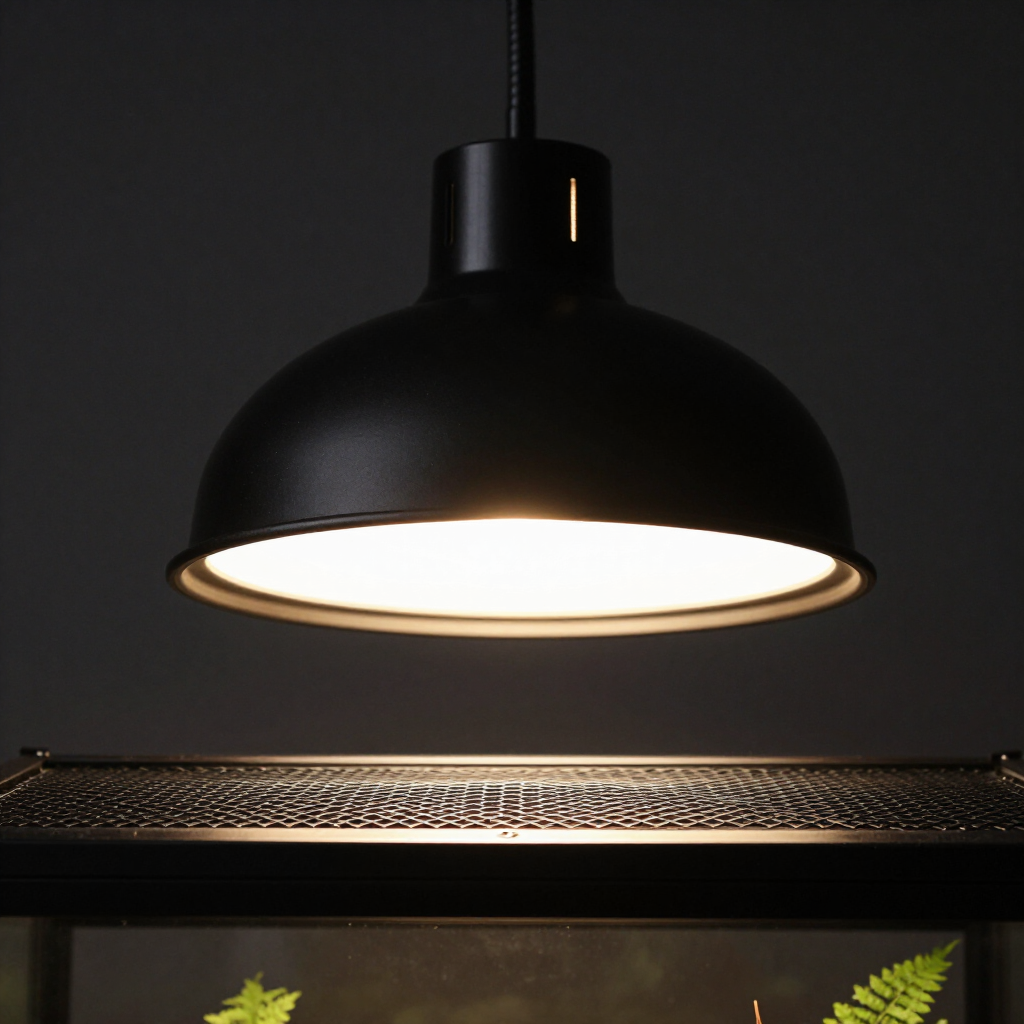
Every heat source runs through a thermostat. Heat rocks are never safe. Basking bulbs sit behind a guard or outside reach. And heat sources get replaced on schedule — a failing ceramic emitter often shows no visible sign before it dies.
Products Mentioned in This Guide
Zoo Med ReptiTherm Under Tank Heater (30–40 gal)
Real product photo to be added
heating
Zoo Med ReptiTherm Under Tank Heater (30–40 gal)
Best for: Creating a warm hide at 88–92°F
$25–$35
Arcadia Deep Heat Projector (50W)
Real product photo to be added
heating
Arcadia Deep Heat Projector (50W)
Best for: Natural overhead belly-and-back heat
$45–$60
Zoo Med Ceramic Heat Emitter (60W)
Real product photo to be added
heating
Zoo Med Ceramic Heat Emitter (60W)
Best for: Backup heat for cold winter rooms
$25–$35