This article contains affiliate links. If you buy through them, we may earn a commission at no additional cost to you. We may partner with multiple retailers and brands.
The shopping list
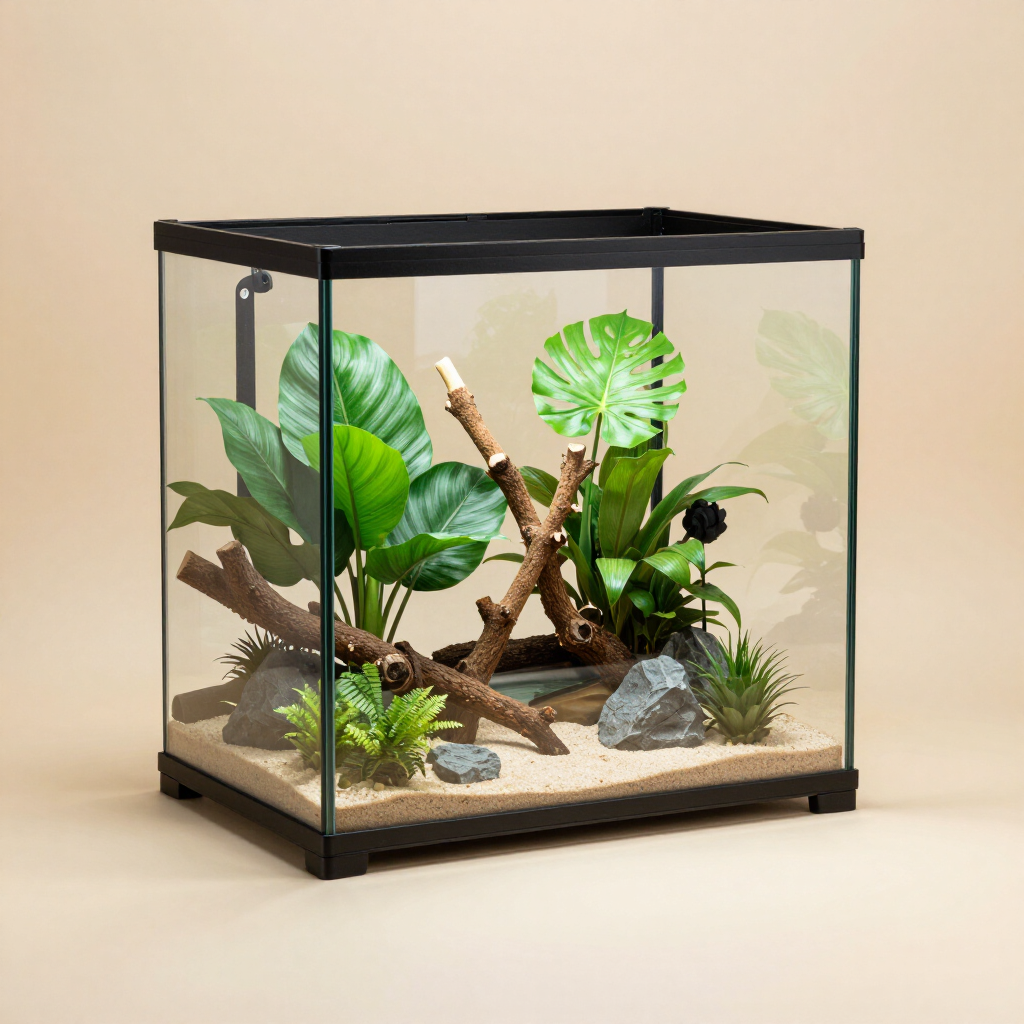
You need seven things: a 36–40 gallon front-opening terrarium, an under-tank heater, a thermostat, a low-output UVB kit, substrate, three hides (warm, cool and humid), and calcium plus a multivitamin. Budget roughly $350–$530 for quality gear that lasts.
Buy everything before the gecko. A new animal should move into a stable, running enclosure — not a tank you are still adjusting.
Building the temperature gradient
Place the heat mat under one end only, with the thermostat probe directly above it. Target 88–92°F on the warm floor, 75–80°F on the cool side, and a gentle night drop to the low 70s.
Verify with a digital probe thermometer and an infrared temp gun — the dial stickers sold in pet stores are notoriously inaccurate.
Hides, humidity and the first week
Leopard geckos need three hides: one over the heat mat, one on the cool side, and one filled with damp sphagnum moss to aid shedding. Skip this humid hide and you will eventually deal with stuck shed on toes.
After move-in, resist handling for 5–7 days. Offer gut-loaded dubia roaches or crickets in the evening, dusted with calcium, and let the gecko settle at its own pace.
Products Mentioned in This Guide
Live Dubia Roaches (Mixed Sizes)
Real product photo to be added
food-feeders
Live Dubia Roaches (Mixed Sizes)
Best for: A nutritious everyday staple
$15–$30
Zoo Med Can O' Worms & Mealworm Combo
Real product photo to be added
food-feeders
Zoo Med Can O' Worms & Mealworm Combo
Best for: Convenience and variety
$8–$14
Live Waxworms (Treat Feeder)
Real product photo to be added
food-feeders
Live Waxworms (Treat Feeder)
Best for: Getting reluctant feeders eating
$10–$18